Skip to content
 

Plasterboard

Browse plasterboard at B&Q, also known as drywall or wallboard, available in a range of types including moisture resistant and fire resistant options, in sizes suitable for walls, partitions and ceilings. Standard plasterboard is suitable for most internal walls, with acoustic plasterboard available for improved sound insulation between rooms. Common thicknesses include 9.5mm for ceilings and lightweight applications and 12.5mm for standard wall use. Plasterboard sheets are available for bulk delivery, making them a practical option for larger building and renovation projects.

Showing 48 of 107 products

By Type

Drywall types vary by performance and application, with the right choice depending on the room and its specific requirements. Standard plasterboard is the most widely used option for internal walls and ceilings, providing a smooth, paintable surface for general living spaces. Moisture resistant plasterboard is designed for bathrooms, kitchens and other humid areas, protecting against damp and mould. Acoustic plasterboard reduces sound transfer between rooms, making it a practical choice for bedrooms, home offices and home cinemas.

Fire plasterboard slows the spread of flames and is recommended for stairwells, kitchens and areas around heating appliances. For smaller DIY projects, Handiboard plasterboard is lightweight and easier to handle than full-size sheets without compromising on finish quality. Gyproc plasterboard and Knauf plasterboard are the two most widely specified brands in the UK, available across all the main plasterboard types.

By Colour

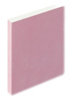
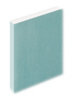
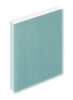
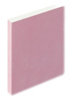
Plasterboard sheets colour coding indicates the board type and its intended application, making it straightforward to identify the right product on site. Green plasterboard is moisture resistant, designed for bathrooms, kitchens and utility rooms where humidity is a concern. Pink plasterboard is fire-rated, providing additional fire protection and is recommended for kitchens, stairwells, boiler rooms and areas subject to building regulation requirements.

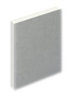
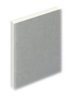
Grey plasterboard is used for acoustic applications, reducing sound transfer between rooms and suited to bedrooms, home offices and multi-storey properties. Blue plasterboard is typically used for standard internal wall and ceiling applications, providing a smooth, paintable surface for general living spaces. Always check the product specification to confirm the colour coding used by the specific manufacturer, as conventions can vary between brands.

By Edge profile

Plasterboard edge profile affects how boards are joined and finished during installation. Square edge plasterboard has flat, straight edges on all sides and is typically used where joints will be covered by a skim coat of plaster, making it a common choice for traditional plastering applications. Tapered edge plasterboard has recessed edges along the long sides, creating a channel when two boards are butted together. This recess is filled with jointing compound and tape for a smooth, flush finish without the need for a full skim coat, making it popular for drylining and dry finishing systems.

Choosing the right edge profile depends on the finishing method planned. Square edge is the standard choice where plaster will be applied over the boards, while tapered edge suits projects where a dry finish is preferred.

By Size

Plasterboard sheet size and thickness both affect how many boards are needed and how straightforward the installation will be. Common sizes include 1800 x 900mm plasterboard for smaller walls and confined spaces, and 2400 x 1200mm plasterboard for larger areas where fewer joints are preferred, reducing finishing time. 1800mm plasterboard is also widely stocked for projects where a shorter board length suits the room dimensions.

Thickness determines the strength and performance of the board. 9.5mm plasterboard is standard for ceilings and lightweight partitions. 12.5mm plasterboard is the most commonly used thickness for internal walls, offering a good balance of durability and ease of handling. 15mm plasterboard suits high-impact areas, party walls and applications requiring improved fire or acoustic performance. As a general guide, measure the total wall and ceiling area before ordering to minimise cutting waste and reduce the number of joins.

FAQs

What types of plasterboard are best for bathrooms or kitchens?

Moisture resistant plasterboard is the recommended choice for bathrooms, kitchens and other high-humidity areas. It is designed to resist damp and prevent mould growth without warping. In areas close to boilers or cookers, a combined moisture and fire resistant board may also be worth considering. Standard plasterboard is not suitable for direct water contact and should not be used in wet rooms without additional waterproofing.
 

How do I choose the right plasterboard thickness?

9.5mm plasterboard is standard for ceilings and lightweight partitions, where ease of handling is important. 12.5mm plasterboard is the most widely used thickness for internal walls, offering good strength and stability. 15mm plasterboard suits high-impact areas, party walls and applications requiring improved fire or acoustic performance. Thicker boards are harder to cut and handle but reduce deflection and improve durability.
 

Can plasterboard be cut to size at home?

Yes. Score along a marked line with a utility knife and T-square, snap the board cleanly and trim the paper backing. Thicker boards may need a fine-toothed saw for precision cuts. Always measure twice before cutting and support the board fully to prevent cracking. Wear a dust mask when cutting as plasterboard dust can be an irritant.
 

What is the difference between square edge and tapered edge?

Square edge plasterboard has flat edges on all sides and is designed for use where a full skim coat of plaster will be applied over the boards. Tapered edge plasterboard has recessed edges along the long sides, creating a channel that is filled with jointing compound and tape for a smooth, dry finish without skimming. Tapered edge is the standard choice for drylining systems.
 

Can plasterboard support heavy items like shelves or cabinets?

Plasterboard alone cannot support heavy items. Shelves, cabinets and wall-mounted TVs should be fixed directly into the timber or metal studs behind the boards. Where stud positions do not align with fixing points, specialist cavity wall anchors or toggle fixings distribute the load across a wider area. Check the weight rating of any fixing before use.
 

How do I fix plasterboard to walls?

Plasterboard can be fixed using screws into timber or metal studwork, or bonded directly to a solid wall using plasterboard adhesive. Screwing into studwork is the most common method for stud partition walls, with fixings placed at regular intervals along the studs. Adhesive bonding suits solid masonry walls where studwork is not in place. Always follow the manufacturer's fixing guidelines for the specific board type.