Skip to content
 

Skirting board

Browse skirting boards at B&Q, also known as baseboards, available in a range of profiles and finishes to suit both traditional and contemporary interiors. Skirting boards cover the joint between wall and floor, protecting walls from scuffs and kicks while providing a clean decorative finish to any room. Most options are primed and ready to paint, or available fully finished for a quicker installation. Heights range from mini skirting at 70mm up to deep skirting boards at 220mm, with most boards fixed using adhesive, screws or a combination of both.

Showing 48 of over 10,200 products

Edge profile

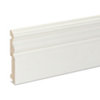
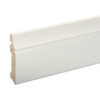
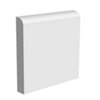
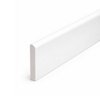
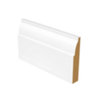
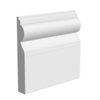
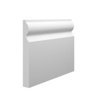
Skirting profiles vary in shape and detailing, with the right choice depending on the style of your room and the level of decorative finish you want. Bullnose skirting, rounded skirting and torus skirting feature soft curves that work in both traditional and contemporary interiors and help conceal minor wall imperfections at the floor joint. For modern or minimalist spaces, square skirting and chamfered skirting offer clean, straight lines that suit contemporary furniture and décor.

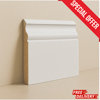
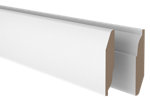
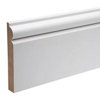
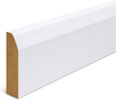
More ornate profiles, including ogee skirting, ovolo skirting and lambs tongue skirting, suit period properties, heritage renovations and feature rooms where decorative detail is important. Bevelled skirting adds angular definition to a room, while dual profile skirting combines two edge styles in a single board for rooms where a transitional look is needed. Matching your skirting profile to your architrave is recommended for a consistent finish throughout the home.

Materials

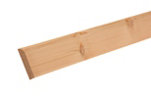
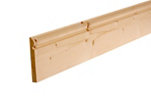
Skirting board material affects durability, appearance and how the board responds to moisture and wear. MDF skirting is the most widely used option, valued for its smooth, consistent surface that takes paint well and resists warping. Pine skirting and redwood skirting are natural softwoods that can be painted or stained, offering a warm finish at an affordable price point. Oak skirting and solid oak skirting provide a premium hardwood option with natural grain and greater resistance to knocks, making them a practical choice for high-traffic areas and period homes.

For moisture-prone rooms such as kitchens and bathrooms, PVC skirting and uPVC skirting are water-resistant and require no painting or treatment. Hardwood skirting board offers greater strength and longevity than softwood alternatives, while softwood skirting board is lighter, easier to cut and a practical choice for straightforward DIY installation. A wood skirting board in any species can be painted, stained or left natural to suit the room.

Colour & finishes

Skirting is available in a range of colours and finishes to suit different interior styles and installation requirements. White skirting board is the most common choice, providing a clean finish that works in most rooms, from traditional to contemporary. Black skirting board suits modern interiors where contrast against light walls is wanted, while brown skirting board complements wood flooring and adds warmth to a room. Natural skirting board shows the timber grain and is a practical choice where the board will be stained rather than painted.

Primed skirting board arrives ready to paint, giving full control over the final colour to match existing décor. Fully finished skirting board is pre-painted and ready to fit straight away, reducing installation time. Unfinished skirting board suits projects where a custom stain or specialist paint finish is needed.

Sizes

Skirting board size affects both the visual weight of the board and its practical performance. Thickness determines durability, with slimmer boards, such as a 14.5mm skirting board or 15mm skirting board suiting modern, minimal interiors, while an 18mm skirting board or 25mm skirting board offers a more robust finish with better resistance to knocks and scuffs.

Width should be proportional to ceiling height and room size. A 100mm skirting board suits smaller rooms and lower ceilings, while a 120mm skirting board and 150mm skirting board work well in standard rooms. A 170mm skirting board adds architectural impact in larger rooms or spaces with tall ceilings. As a general guide, skirting height is typically set at around one twelfth of the ceiling height for balanced proportions.

FAQs

How do I measure walls for skirting boards?

Measure the total linear length of each wall where skirting will be fitted, including alcoves and recesses. Note each section individually and add a small allowance for corner joints and mitred edges. For uneven walls, measure at multiple points to ensure boards will sit flush. Always buy slightly more than your measured total to account for cutting waste.
 

Can I fit skirting boards myself?

Most skirting boards can be fitted as a DIY project with basic tools including a saw, mitre box, spirit level and adhesive. Primed and fully finished boards are straightforward to handle and fix. Professional fitting is worth considering for ornate profiles, uneven walls or complex corner layouts where precision is harder to achieve.
 

Do I need to paint skirting boards before or after fitting?

Either approach works. Painting before fitting gives easier access to decorative profiles and full coverage on all faces. Painting after fitting allows you to seal joints against the wall with caulk for a neater finish. For MDF or primed boards, sand lightly before painting to improve adhesion, and use a quality primer for durability.
 

How do I cut skirting boards to fit corners?

Internal corners require boards cut at 45 degrees using a mitre box so they meet flush. External corner angles can vary slightly so measure carefully before cutting. A fine-toothed saw reduces chipping on MDF or painted boards. Always dry-fit boards before final fixing to check the joint and make adjustments before applying adhesive or nails.
 

Can I install skirting boards over existing flooring?

Yes, in most cases. Ensure the skirting sits flush against the wall with adequate clearance for carpet, laminate or underlay thickness. Boards can be fixed with nails, screws or construction adhesive depending on wall type. For uneven floors, flexible caulk at the base produces a neater finish than rigid fixing alone.
 

What is the standard height for skirting boards?

There is no fixed standard, but a common guide is to set skirting height at around one twelfth of the ceiling height. For a standard 2.4m ceiling this suggests approximately 170-200mm. Taller ceilings suit deeper skirting for balanced proportions, while rooms with lower ceilings typically use narrower boards of 100-120mm. Matching skirting height to architrave proportions also helps achieve a consistent finish.